When you put “neck firming exercises after rapid weight loss Australia” into a search engine you are not looking for any of the fluff they put out at the salon; you want to be told how it is. In brief: while exercise will do wonders for muscle tone and posture and can take the mild fullness from under the chin, it is not going to put back the tightness on neck skin that has been left lax by a quick drop in weight. Should the problem be one of poor posture and weak muscles, a regimen is in order. If it is a case of surplus skin then you might require time, some support from your skincare or even treatment.
I am Lawrence Vale and on this subject I prefer to have expectation and reality in the same room. Do a chin tuck and a few other facial moves and you can put a bit of an edge on the area, particularly if you have been sitting with your head cocked over a laptop like a galah on a fencepost. But where there is post-weight-loss skin on the neck, no jaw jut exercise is going to perform heroics and reattach your collagen by morning.
The Effect of Rapid Weight Loss
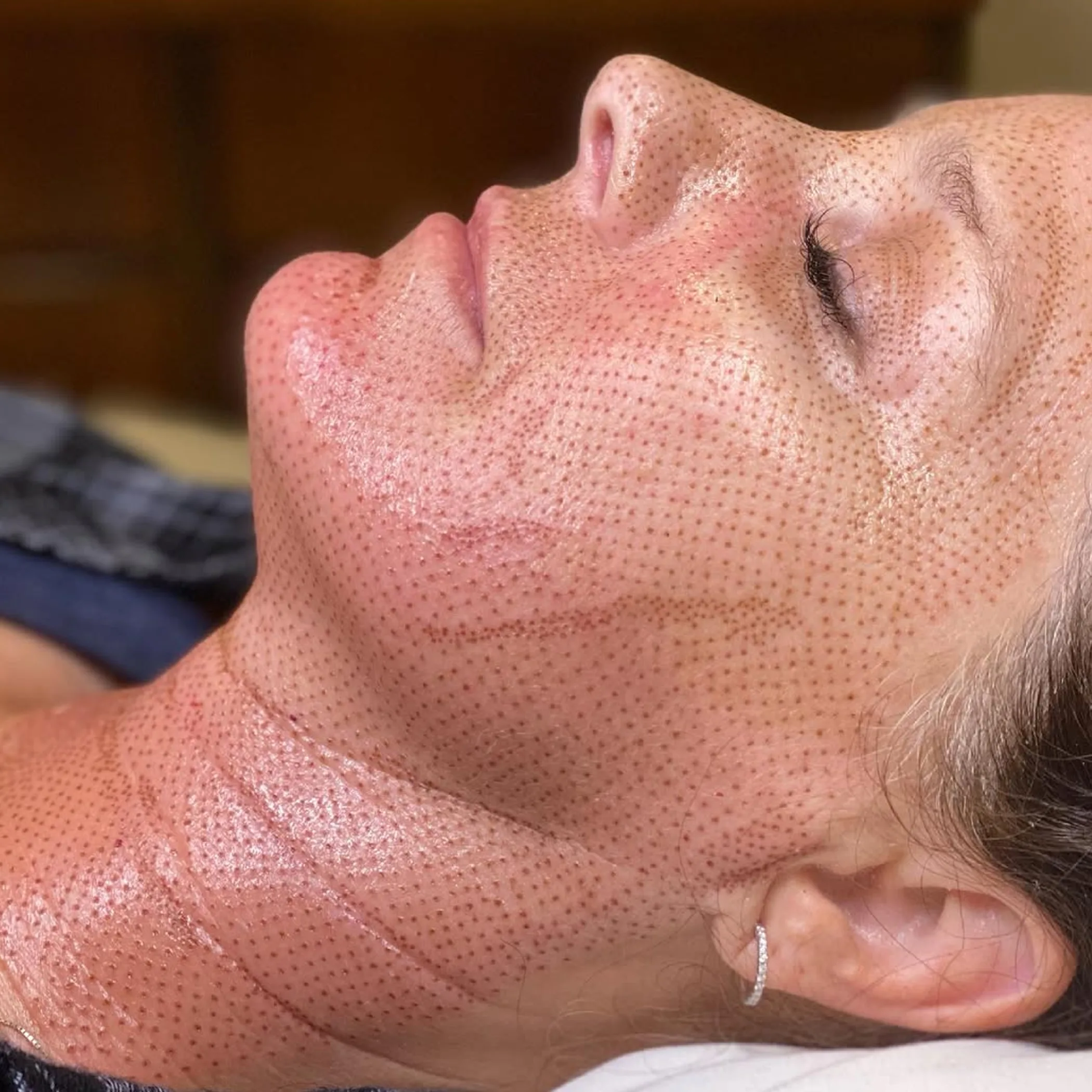
You can lose weight so fast the neck changes before the skin has a chance. The fat is gone but elasticity is another matter and does not always recover as quickly, age and genetics and sun exposure and the sheer volume of the loss being factors. For those concerned, there are non-surgical neck tightening options.
It is a mismatch that will catch you unawares. You put in the work, get fitter and yet the neck seems to have put on years or is more folded than you would like. Common enough, though rough as guts.
Why the neck is prone to it
For a start the skin is thin. It is also put to work holding and moving the head and takes more of the sun than most would have you believe. When the fat goes in a hurry the platysma and the skin over it may not contract sufficiently to hold things firm. Which is why you will see people asking how to get their neck skin to tighten, or refer to an “Ozempic neck” following appetite suppression or medical intervention. The phrase is a handy way of putting it but the underlying cause is the same regardless of the medicine: a decline in collagen and support due to volume loss.
What the evidence would have you believe
There is a sensible middle ground. Some will find their double chin less of an issue with overall fat loss and better positioning of the neck. But do not expect to shed redundant skin as you would with a neck lift. A lot of what is put about online makes no distinction between skin and muscle. They are not one and the same. Try to smooth a fitted sheet over a shrunken mattress and you will understand the limitations.
Exercises have their place
One does not set out to make loose skin disappear. One works on what can be trained: the deep neck flexors, the platysma, lower face control and posture. I would put the honest version to you rather than deal in false hope. The home exercises available to our readers in Australia can give the neck a tidier appearance from some angles and make it seem less heavy. Not dramatic, but a gain all the same.
Posture and Muscle Tone
With a forward head the front of the neck is flattened and skin bunched below the chin. Put the posture right and you will see the change straight away in a profile picture or on video. The deep neck flexors and platysma are the muscles at play here. Work the platysma and you may get a little more tension and control in the superficial neck, but where the skin excess is marked it is no replacement for a collagen treatment.
Best results are had when there is only early softening or a touch of under-chin fullness to contend with. If the skin is hanging or there is major volume loss they are of limited use.
Make a day of it and begin with the chin tuck and some posture correction. You will get more out of them with less trouble and they are safer than the turkey neck exercises type of thing you find on the internet which is more interpretive theatre than exercise.
A simple routine for the day
Here is the practical side of it. There is no call for a clinic package, some contraption or the neck version of a road train to put you in gear. What is called for is consistency and sound technique, with the patience to not be hard on yourself after three days.
The following routine will suit most adults who have mild to moderate issues in the wake of weight loss. Discontinue at once should you experience any pain, dizziness, a locking jaw, tingling or a headache.
Four Key Movements
Chin Tuck: Whether sitting or standing, keep your ears aligned with your shoulders and pull your chin back in a straight line, as though to form a double chin of sorts. Do not tuck it down. Hold 5 seconds and do this 8 to 10 times for the sake of deep neck support and to correct your posture.
Jaw Jut: Only if you are comfortable, tip your head back a little and advance the lower jaw until the bottom teeth are before the uppers. A hold of 3 to 5 seconds is sufficient; 8 repetitions. Good for putting some life in the front-neck muscles and as an adjunct to other post weight loss exercises.
Platysma Activation: Lips together, tense the front of the neck in a controlled way by drawing the corners of the mouth down slightly. 5 seconds, 8 to 10 times. There should be no strain to these platysma exercises.
Neck Lift Variation: On your back, pillow free, press your tongue up to the roof of your mouth and raise your head to where you can see your toes. 2 or 3 seconds, 5 to 8 times. Those with neck pain would be unwise to try this.
Where Most People Go Wrong
Control is what one should be after, not a burn. You are not training well if you have your face scrunched and shoulders up by your ears while yanking your head about; you are simply aggravating your neck.
Then there is the error of overdoing it from the outset. The front of the neck is not a biceps curl. Stick to a round a day, four or five days of the week, and add more only so long as you remain comfortable.
On the subject of timing
It is reasonable to want a timeline. But this is not a case of a haircut or changing a tyre. Any visible change will be slow work, manifesting in the course of a few weeks as your posture and muscle tone improve.
You will not see the progress when you are looking at your own face every day, so make a point of tracking it. Every fortnight, put yourself in the same relaxed posture and check from the same angle and lighting.
Progress In Realistic Terms
An 8 to 12 week trial is sensible. Within the first month or so there is less strain and you will find you carry your head better. At 6 to 12 weeks a certain contour improvement may be apparent under the chin.
Cleveland Clinic and Healthline would tell you the same thing in their expert summaries: facial exercises have their place in building muscle but the evidence for them to effect major skin tightening is wanting. Hence the need for a combined approach to tighten the neck after losing weight.
| Concern | What May Be of Help | What Will Not Be Fixed | Timeframe |
| Mild soft jawline | Profile, muscle tone and posture | Loose skin of any consequence | 6-12 weeks |
| A small double chin (post weight loss) | Some showing of it with fat loss and posture | Fat removal in isolation | 8-12 weeks |
| Hanging neck skin that is pronounced | Only a minor degree of support | Redundant skin | Review of treatment likely |
| Platysmal banding | A touch more control | Marked banding | Variable |
One fact of the matter is that skin elasticity wanes with age and sun exposure, hampering recovery. For those in Australia, protecting the collagen and staving off damage is not optional window dressing; the Government’s health advice on ultraviolet exposure is pertinent. Have a look at the sun protection guidance from Healthdirect Australia.
When It Is Not Enough
Many an article will not address this: after a rapid or major loss of weight, exercise is unlikely to give you the outcome you are after if the skin is moderately to severely loose. No failure there, it is just anatomy.
Skin laxity is a matter of overstretched tissue, a lack of volume and collagen, or perhaps fat pockets and platysmal banding which require other means.
Telltale Signs
Exercises have their limits if the skin is loose in good posture, hangs in a fold when you are at rest or bunches up when you look down. Ditto if the problem has been made worse by a large weight loss in a short time.
For a certain type of patient, non-surgical neck tightening is the way to go. The appeal is in what they can do: put some smoothness back into the texture, address any mild or moderate laxity and in some cases get collagen to remodel. Do not expect the same from them as you would from an operation when there is a good deal of excess skin to be had; results are not uniform.
Treatment Choices In Australia
Comparison is the sensible course of action if one is thinking of putting in for clinic treatments, as opposed to booking in on a whim. Depending on who is selling it, you will find options that go after fat or skin, or both in a manner that is less than ideal.
Lawrence Vale has a no-nonsense way about it: make sure you know what tissue is under treatment, the number of sessions to be had, how much downtime is involved and if your desired result is within reach. Should a clinic be evasive, move on.
A look at Non-Surgical Approaches
Do a search for neck skin laxity treatment in Australia and one is bound to come across radiofrequency, ultrasound, thread lifts and the odd surgical page thrown in. You might see the likes of ultherapy or the names of Rejuvaustralia, Artiste Plastic Surgery, Hasan Surgery and Dr Scott Turner pop up. We put them in for the record of current consumer research, not to offer any kind of endorsement.
| Option | Main Target | Best For | Downtime | Limitations | Rough Cost (AUD) |
| Radiofrequency | Heat to tighten the skin | Mild laxity | Low | Multiple sessions are the norm | 300–1,500 per session |
| Ultrasound Therapy / Ultherapy | Collagen remodeling at depth | Mild to moderate laxity | Low | No facelift and some discomfort | 1,500–4,500+ |
| Thread Lift | Support and a lift of sorts | Some mild sagging | Low to moderate | How long it lasts is open to question | 2,000–5,000+ |
| Fat-Dissolving Injections | Submental fat | Chin fullness | Moderate swelling | Kybella is not the standard brand here; does nothing for loose skin | Wide variance |
| Neck Lift | Contouring of muscle and superfluous skin | Laxity of a more severe nature | Higher | Recovery and surgery | 8,000–20,000+ |
Then there is the matter of reality. Radiofrequency and ultrasound will add firmness but are not going to take skin away. A thread lift is a tidy solution for the right face and neck yet it is not permanent. With substantial loose skin following a weight loss, the neck lift is still the best bet.
As for Kybella, product availability and TGA rules are subject to change so it is best to have a word with a qualified clinician in Australia over such things. And if the problem is loose skin, a fat-dissolving treatment is only going to make you appear looser.
When to have things reviewed
Home remedies can become an exercise in futility. When the neck is a source of distress or tied to a major weight loss, then a review with the GP is in order before any surgical consultation is entertained. It is important in Australia for the GP to put to rest whether it is a cosmetic matter or something like thyroid swelling, lymph nodes, posture or a side effect of medication.
Red Flags And Referral
Any new lump, difficulty with swallowing, a change in voice, unexplained pain or rapid asymmetry should be seen by a GP without delay. On the cosmetic front, 8 to 12 weeks of exercise with no improvement is a good time to refer, as is obvious hanging skin.
Should surgery be on the cards, put some questions to the specialist plastic surgeon: what is the procedure, the recovery time, the revision policy and what is the cost in AUD? Factor in the logistics of parking and transport. One does not want to be making a heroic solo trip on the tram with a takeaway coffee and a compression garment after being put under; have a driver and someone at home to help.
Firmness and daily habits
The neck will respond better to exercises if other factors are not working against it. Good nutrition, sun protection, stable weight and skincare for barrier function are all part of the equation. There is nothing to be said for the tedium of these basics, but then again, neither is putting money down for a treatment while you are out at the beach cooking your collagen.
Habits Worth Having
Make it a habit to put on some broad-spectrum sunscreen for the neck every day; in Australia the UV will not let you get away with anything. Protecting sensitive neck tissue from thermal and sun damage is crucial—see Prevent Hyperpigmentation From Sweat And Heat In Australia Summer to learn how to keep your skin barrier calm under extreme weather conditions.
Once the weight is off, try to keep it there. Going through cycles of loss and gain will do nothing for skin laxity.
Get enough protein and see to your nutrition so the tissues can be properly repaired. A no frills moisturiser is fine, or put in a word with your clinician about retinoids or other active skincare if appropriate.
Have a look at your workstation as well. Letting a laptop sit too low and all the work you have put into your posture is for naught.
Then there are the likes of Iron-Neck and other resistance contraptions one sees being sold for neck strength. Do not expect cosmetic tightening from them after a weight loss; they are for an athlete’s conditioning. I would not put them forward to most of my readers, let alone a novice, as it is too easy to end up sore from overloading the neck instead of any better for it.
A Word on Safety
There should be some effort in neck exercises but they ought to be controlled, never painful or make you feel lightheaded. For anyone with osteoporosis, disc disease, TMJ or migraines, or problems with the cervical spine, medical opinion is in order before attempting anything strenuous. The same applies to those who have had bariatric work or are otherwise convalescing from illness or major body changes. One does not make guesses with the neck.
Some Moves to Steer Clear Of
Beginners with poor mobility or pain in the neck should leave the floor variation of the neck lift alone. Jaw jut type work is liable to aggravate jaw joint trouble in some. And if form is not good, turkey neck exercises that involve extension can bring on a headache or pinching.
Should you experience vertigo, a headache that will not go away, numbness, tingling or any shooting pain, desist. It is better to have a proper assessment than to push on. Like a washed out bush track: the fact another has driven it is no reason to put your vehicle to the test.
The Bottom Line
When rapid weight loss has left the neck looking loose, stick to the easy things: sun protection, a stable weight, some chin tucks and platysma work and fix your posture. Put in 8 to 12 weeks and be candid with your photos. Where there is moderate to severe excess of skin, do not put in months for miracles from facial exercises. Non-surgical means may be called for with some laxity and a surgical consultation when the skin is clearly redundant. As Lawrence Vale would say, exercises have their place but they are no magic and the neck is not something to be hyped.
Frequently Asked Questions
After the tea is done and a good hard look in the mirror, these are the sort of questions one might have.
How do you tighten a saggy neck once the weight is gone?
Posture correction, chin tucks, a bit of gentle platysma work, and some diligence with the sun and your weight. An 8 to 12 week course of it. But if the sag is from a lot of loose skin and not weak muscle, exercise will not be enough and you may be better off with a clinic or surgery.
Getting rid of neck fat post-weight loss?
Targeted exercise can help with tone and appearance around the chin but it is not going to spot-reduce fat. If there is submental fullness left over it is worth having assessed to see what is fat and what is skin, as the treatments are not the same.
Will exercise do the job on a sagging neck?
It can make a difference where there is an issue of posture or mild fullness and low muscle tone, but do not count on it to put an end to loose skin. Realistic improvement yes, dramatic results no.
What about Ozempic neck?
You treat it as you would any change from losing weight in a hurry: build a routine, stabilise the weight and shield the skin. A clinician can put forward options if there is loose skin to be dealt with.
Is it worth doing double chin exercises after you have lost the weight?
For sensible expectations, yes. They are good for contour and control of the muscles. When there is marked anatomical fullness or a preponderance of skin however, they are no substitute for treatment.
See the official resource: WA Radiological Council (laser safety).